
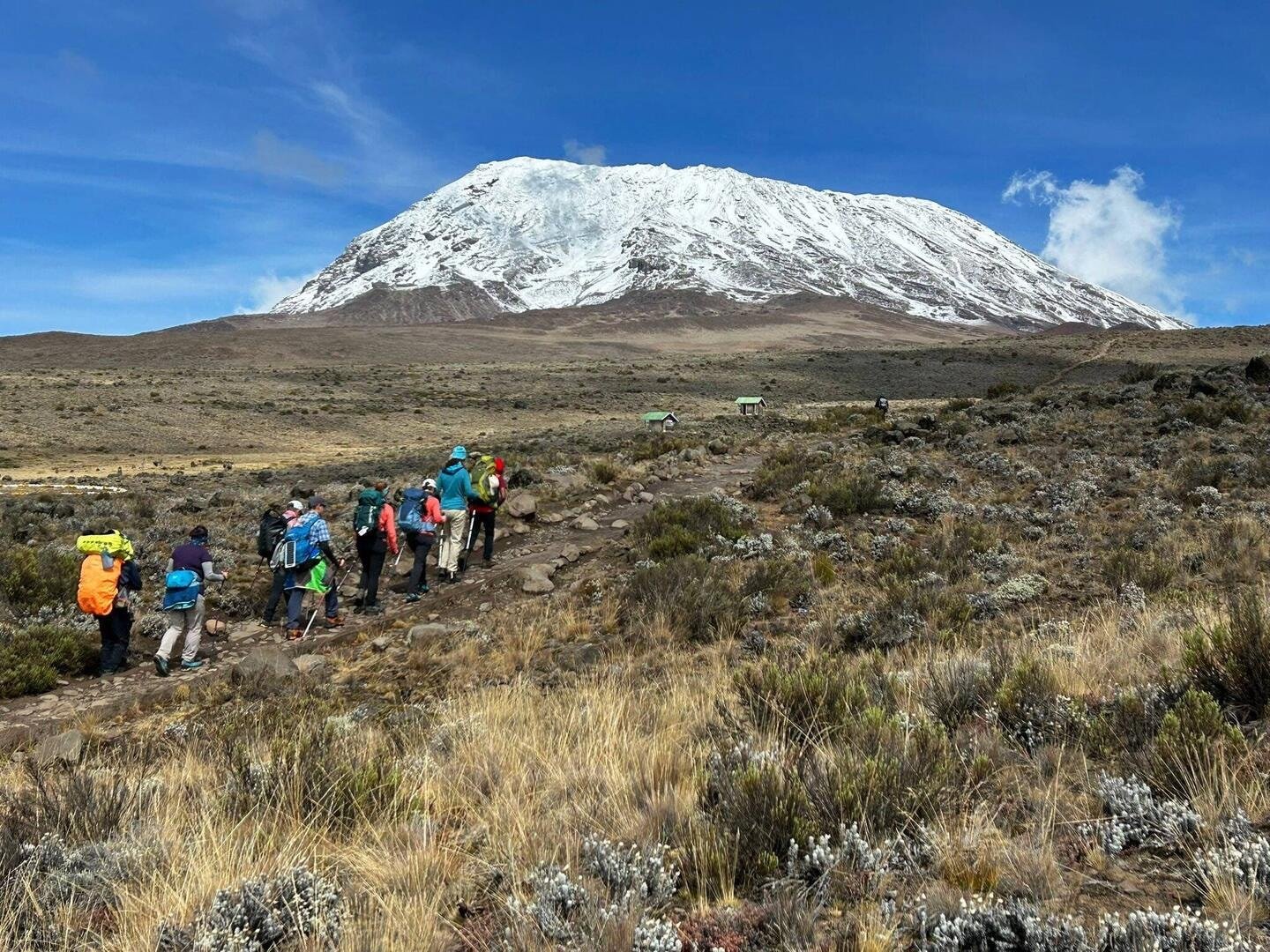
Climbing Mount Kilimanjaro is challenging, but it does not require technical climbing skills. The difficulty comes mainly from high altitude, long trekking days, and changing weather conditions rather than steep or dangerous terrain.
Kilimanjaro is classified as a high-altitude trek, not a mountaineering climb.
Is Kilimanjaro Difficult for Beginners?
Yes—and no.
Kilimanjaro is achievable for first-time trekkers who are reasonably fit and well prepared. However, it should not be underestimated. Many climbers fail to reach the summit due to altitude sickness, poor pacing, or inadequate preparation.
Success depends more on:
- Acclimatization
- Route choice
- Physical fitness
- Mental determination
- Proper preparation and gear
Main Factors That Make Kilimanjaro Difficult
High Altitude
The biggest challenge is altitude. Uhuru Peak stands at 5,895 meters (19,341 feet), where oxygen levels are about 50% lower than at sea level.
Common altitude symptoms include:
- Headache
- Nausea
- Fatigue
- Shortness of breath
- Dizziness
Going slowly and choosing longer routes greatly improves success rates.
Long Trekking Days
Most days involve 5–8 hours of walking, with summit night lasting 10–14 hours of continuous hiking in cold, dark conditions.
Weather & Temperature Changes
Climbers pass through five climate zones:
- Tropical rainforest
- Moorland
- Alpine desert
- Arctic summit zone
Temperatures can range from 30°C during the day to -10°C or colder at night, especially on summit day.
Mental Challenge
Summit night is physically and mentally demanding. Cold temperatures, altitude, exhaustion, and darkness test determination more than strength.
Which Kilimanjaro Route Is the Easiest?
Routes with better acclimatization are considered easier, even if they are longer.
Easier / Higher Success Routes:
- Lemosho Route
- Northern Circuit
- Machame Route (with proper pacing)
More Challenging Routes:
- Marangu Route (shorter acclimatization)
- Rongai Route (drier but less acclimatization)
Longer routes = higher summit success rates.
Do You Need Technical Skills to Climb Kilimanjaro?
No technical climbing skills are required.
You do NOT need:
- Ropes
- Ice axes
- Rock climbing experience
You DO need:
- Good hiking endurance
- Basic fitness
- Mental resilience
- Ability to walk uphill for multiple days
Fitness Level Required
You don’t need to be an athlete, but you should:
- Be comfortable walking 6–8 hours a day
- Train with hiking, stairs, or cardio
- Strengthen legs and core
- Practice with a daypack
Proper training significantly reduces difficulty.
How Hard Is Summit Night?
Summit night is the hardest part of the climb.
Challenges include:
- Extreme cold
- Steep volcanic scree
- Thin air
- Long hours of hiking
However, with good pacing, warm gear, and strong support from guides, many climbers succeed—even those without prior high-altitude experience.
Final Verdict: Is Kilimanjaro Hard?
Climbing Kilimanjaro is physically demanding but achievable for most people with the right preparation.
It is not about speed or strength—it is about:
- Going slowly
- Acclimatizing properly
- Staying positive
- Trusting experienced guides
With the right route, preparation, and mindset, Kilimanjaro is a realistic goal for determined trekkers.